We independently review everything we recommend. When you buy through our links, we may earn a commission. Learn more.
In this article ⌄
Over the past few months, I’ve had more women come to me with a question I never used to hear: "Can GLP-1s help me stay healthy as I age... even if I don’t need to lose a lot of weight?"
That question is at the heart of a much bigger conversation happening right now.
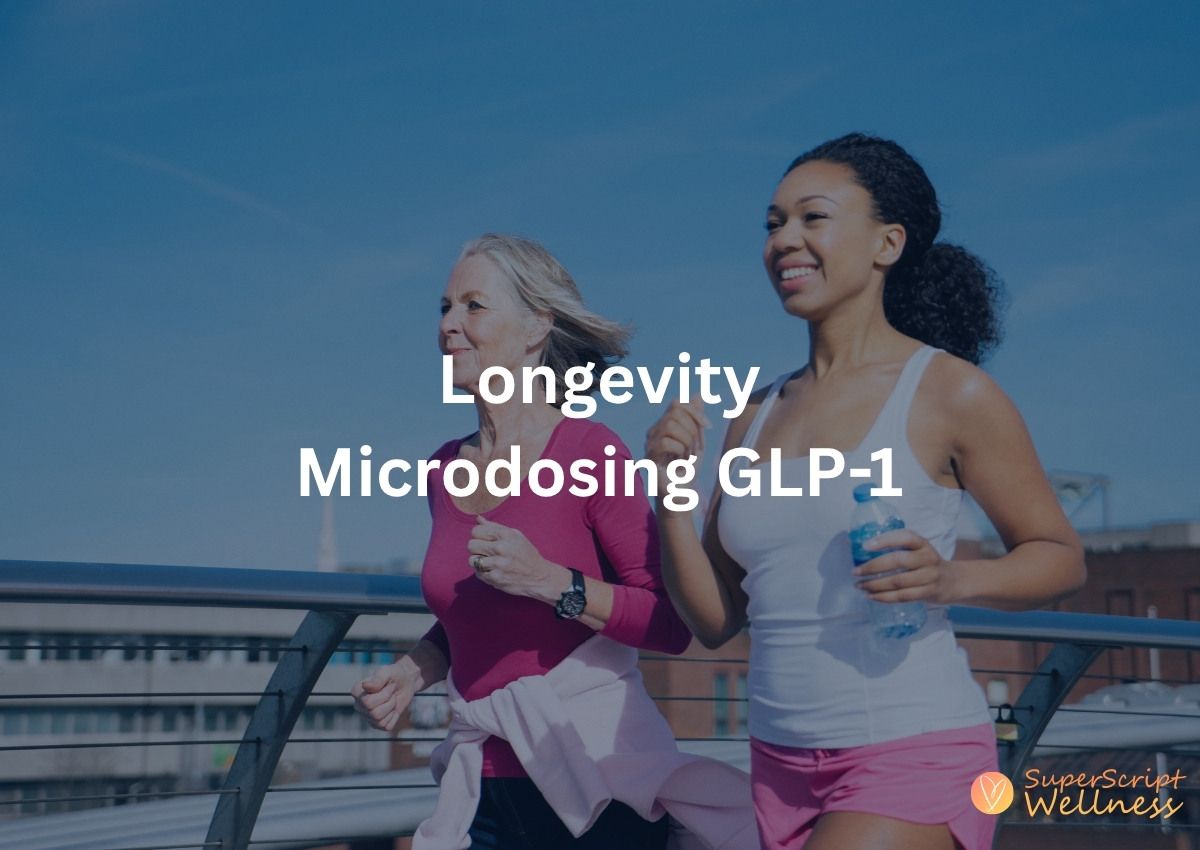
Yes, GLP-1 medications (like semaglutide or tirzepatide) are widely known for weight loss. But a growing number of women are now microdosing these medications—not for major fat loss, but to support things like metabolic balance, inflammation, and healthy aging.
Let’s talk about what that means, and why more women are exploring it.
What "Longevity" Really Means
Longevity isn't just about living longer. It's about living better:
- Having energy
- Staying mentally sharp
- Reducing disease risk
- Feeling good in your body
For women in midlife, that means addressing hormone shifts, blood sugar, appetite, and metabolism. The things that used to feel easy suddenly get harder. And that’s where microdosing comes in.
What Is Microdosing GLP-1?
Microdosing means taking a lower-than-standard dose of a GLP-1 medication. It’s not about dropping 30 pounds in 3 months. It’s about:
- Gentle appetite regulation
- Lowering inflammation
- Stabilizing blood sugar
- Supporting long-term health markers
It’s not for everyone, but it’s catching on with women who want a slower, smarter path—without aggressive side effects.
Why More Women Are Exploring Microdosing for Longevity
Here’s what we know so far (and yes, studies are still emerging):
- Reduces inflammation and oxidative stress
- Supports cardiovascular health
- Helps regulate insulin and blood sugar
- May protect brain health (early research)
- Improves energy by supporting mitochondria
These are the core issues many of my clients want to address in their 40s, 50s, and beyond—whether or not they need to lose weight.
Real Conversations with Real Women
Let me share a few client scenarios (with names changed):
- Lisa, 47 had lost 20 pounds already, but wanted to maintain her progress and keep her energy up. She hated the side effects of higher doses, so she switched to a longevity microdose.
- Michelle, 52 has a family history of heart disease and wanted a proactive plan to improve her numbers. She didn’t meet the usual criteria for GLP-1s, but microdosing gave her a path forward.
- Sandra, 44 struggled with cravings during perimenopause. Microdosing helped her feel more balanced without making her feel "medicated."
These stories are becoming more common. Not everyone wants (or needs) the most aggressive plan on the market.
Who Qualifies for Microdosing GLP-1?
Unlike some traditional weight loss programs, microdosing isn’t based strictly on BMI. That’s a big deal.
You may qualify if:
- You’re weight stable and want to maintain your results
- You’re dealing with blood sugar swings, cravings, or appetite changes
- You’re focused on preventative health, not just fat loss
- You’re sensitive to side effects from full-dose programs
- You’re in midlife and want support for metabolic shifts, without major dose escalations
This opens up access for more people who want help staying well—not just getting lean.
What to Know Before You Start
If you're curious about microdosing, here are a few tips I give my clients:
- Talk to a provider who understands longevity-based care, not just weight loss
- Track more than your weight: energy, sleep, digestion, mood
- Start low and go slow: it’s a marathon, not a sprint
Microdosing is about working with your body, not forcing it to change overnight.
Take This Home With You
As a dietitian, I’m excited to see conversations around GLP-1s evolve. There’s more to health than a number on the scale.
If you’re thinking about microdosing for longevity, take your time, do your research, and talk to a qualified provider.
P.S. One provider I like for this is EllieMD’s GLP-1 longevity microdosing program. They offer lower-dose GLP-1s (with or without GIP) plus B12, and they actually work with you to personalize the dose. Worth checking out if this route feels aligned with your goals.
About the author
Courtney D'Angelo, MS, RD
Courtney D'Angelo, MS, RD, earned her masters degree in Nutrition and Foods from the University of Georgia. She's a Registered Dietitian at Morrison Healthcare and has a strong passion in helping people improve their wellness! Currently, she helps women in menopause find hormone balance through diet, exercise and science-backed products.