We independently review everything we recommend. When you buy through our links, we may earn a commission. Learn more.
In this article ⌄
- The Basics of Mindful Eating
- Tune Into Your Hunger Cues
- Eat Without Distractions
- Slow Down and Savor Each Bite
- Practice Gratitude
- Check In with Fullness
- The Benefits of Mindful Eating
- Helps with Portion Control
- Reduces Emotional Eating
- Increases Satisfaction
- Improves Digestion
- Cultivates a Positive Relationship with Food
- Practical Tips to Practice Mindful Eating
- Slow Down and Take Smaller Bites
- Put Your Fork Down Between Bites
- Eliminate Distractions
- Use a Hunger and Fullness Scale
- Engage Your Senses
- Check In with Yourself During Your Meal
- How Mindful Eating Helps with Weight Loss
- How to Make Mindful Eating a Part of Your Routine
- Start Small and Build Gradually
- Set a Routine for Eating
- Create a Relaxing Eating Environment
- Practice Deep Breathing Before Meals
- Reflect on Your Meals
- Stay Patient with Yourself
- Frequently Asked Questions
Mindful eating is all about being present with your food—tuning in to how it looks, smells, and feels as you eat, and paying attention to how it makes your body feel.
It’s not about restrictive diets or complicated rules; instead, it’s a way to build a sustainable, balanced relationship with food that supports your overall wellness goals.
As a dietitian, I often recommend mindful eating to help people reconnect with their hunger cues and make healthier, more intentional food choices.
In this article, we’ll explore the basics of mindful eating and how it can help you manage your weight, improve digestion, and cultivate a positive relationship with food.
The Basics of Mindful Eating
Mindful eating is a practice that encourages you to slow down and pay attention to the experience of eating.
It’s about being fully present with your meal, noticing the flavors, textures, and feelings that arise as you eat.
This can help you reconnect with your body's natural hunger cues and make more intentional choices when it comes to food.
Tune Into Your Hunger Cues
Mindful eating starts with listening to your body.
Ask yourself: Am I actually hungry, or am I eating because I’m stressed, bored, or tired? Eating mindfully means waiting for true hunger signals before reaching for food, rather than eating out of habit or emotion.
Take a moment to check in with yourself before meals and snacks
Are you eating because your body needs nourishment, or because something else is driving you to eat?
Being honest with yourself can help you avoid overeating.
Eat Without Distractions
In today’s busy world, it’s easy to eat while scrolling through your phone or watching TV, but that can make it harder to tune into your body’s signals.
Mindful eating encourages you to eat without distractions so you can focus on the food in front of you.
Try eating at the table, away from screens or other distractions. This allows you to fully experience your food and notice how it makes you feel.
Slow Down and Savor Each Bite
Mindful eating is all about slowing down and savoring your meal. Eating too quickly can lead to overeating because your body doesn’t have enough time to signal when it’s full.
Take smaller bites, chew your food thoroughly, and really focus on the flavors and textures of each bite. The more you savor your food, the more satisfying the meal will be, and the less likely you are to overeat.
Practice Gratitude
Mindful eating isn’t just about the physical act of eating—it’s also about being grateful for the food you have. Taking a moment to express gratitude for your meal can help shift your mindset and improve your relationship with food.
Before you start eating, take a deep breath and think about where the food came from, the effort that went into preparing it, and the nourishment it provides.
This simple practice can help you approach eating with a more positive, mindful attitude.
Check In with Fullness
Mindful eating also involves being aware of your fullness cues. Eating slowly and tuning into how you feel during your meal can help you recognize when you’re satisfied, rather than when you’re overly full.
A good practice is to stop eating once you’re comfortably full, rather than continuing to eat until you feel stuffed.
If you’re not sure when to stop, aim to eat until you’re about 80% full—enough to feel satisfied but not overly stuffed.
The Benefits of Mindful Eating
Mindful eating offers a range of benefits that go beyond just improving your relationship with food. It can help you manage your weight, feel more satisfied after meals, and even improve digestion.
From my experience as a dietitian and working with thousands of clients, here are the benefits of mindful eating:
Helps with Portion Control
When you eat mindfully, you're more in tune with your body's hunger and fullness cues. This helps prevent overeating, as you can recognize when you're satisfied and stop eating before you feel too full.
Eating slowly and paying attention to your body can naturally reduce portion sizes without feeling deprived.
Reduces Emotional Eating
Mindful eating encourages you to pay attention to why you’re eating.
If you’re eating out of emotion—stress, boredom, or sadness—mindfulness helps you become aware of those triggers.
With practice, you can find healthier ways to cope with emotions that don't involve turning to food.
By recognizing emotional triggers, you can make more intentional choices about when and what to eat, rather than reacting impulsively to your emotions.
Increases Satisfaction
When you eat slowly and savor your food, you’re more likely to feel satisfied and content with your meal.
Mindful eating allows you to fully experience the flavors and textures of the food, which can help you feel more satisfied with less food.
This can make it easier to stick to balanced meals without the temptation to overeat.
Improves Digestion
Eating mindfully also improves your digestion. When you slow down, you’re less likely to gulp down food too quickly, which can lead to indigestion or bloating.
Chewing your food thoroughly allows your digestive system to process it more easily, leading to better digestion and less discomfort after meals.
Cultivates a Positive Relationship with Food
Mindful eating helps you break free from the cycle of guilt or shame associated with food.
By focusing on the experience of eating, rather than calorie counting or labeling foods as “good” or “bad,” you begin to build a healthier, more positive relationship with food.
This mindset shift makes it easier to enjoy meals without stress or anxiety.
Practical Tips to Practice Mindful Eating
Now that you know the basics and benefits of mindful eating, let’s talk about some simple, practical tips you can start using today to incorporate mindfulness into your eating habits.
These tips are easy to implement and can help you make more intentional, satisfying food choices.
Slow Down and Take Smaller Bites
It’s easy to rush through meals when you’re busy, but eating too quickly can lead to overeating.
Take smaller bites and chew your food thoroughly. This allows your body time to send signals to your brain that you’re full, helping you avoid overeating.
Put Your Fork Down Between Bites
It may sound simple, but putting your fork down between bites helps you focus on your food and stay present. This tiny shift allows you to fully savor each bite and pay attention to how your food makes you feel.
Eliminate Distractions
Turn off the TV, put down your phone, and give yourself the time to enjoy your meal without distractions.
Eating while distracted can make it harder to recognize when you’re full and can lead to mindless overeating.
Try creating a calm, peaceful environment for your meals so you can fully focus on the experience of eating.
Use a Hunger and Fullness Scale
A helpful tool for mindful eating is the hunger and fullness scale.
Before eating, rate your hunger on a scale from 1 to 10. Aim to eat when you're at a 3 or 4 (hungry but not starving) and stop when you reach a 6 or 7 (comfortably full, but not stuffed). This helps you tune into your body’s natural cues.
Engage Your Senses
Pay attention to the look, smell, taste, and texture of your food. Engage all your senses to make the eating experience more satisfying.
When you eat mindfully, you’re more likely to enjoy your meal and feel satisfied with less food.
Check In with Yourself During Your Meal
As you eat, take a moment to check in with yourself. Ask:
- Am I still hungry, or is it something else driving me to eat?
- How does the food taste?
- Am I enjoying the meal, or am I rushing through it?
This mindfulness helps you stay in tune with your body’s needs and avoid overeating.
How Mindful Eating Helps with Weight Loss
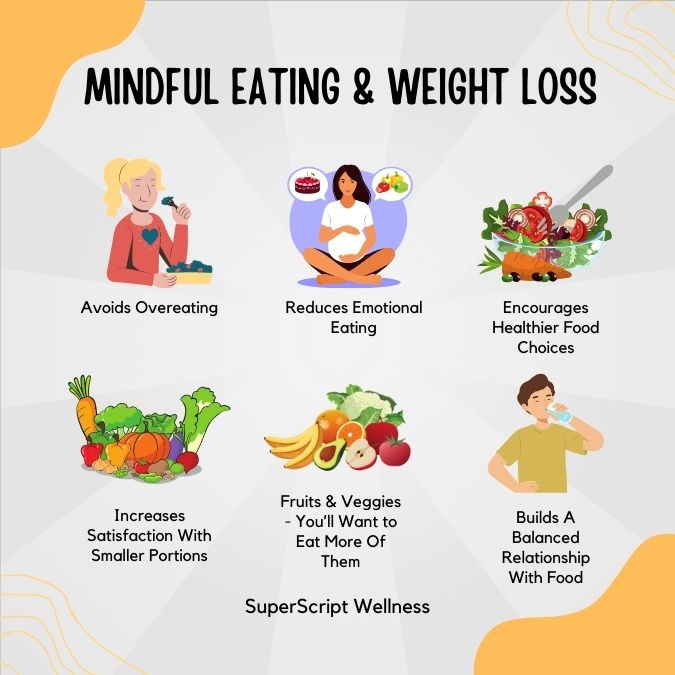
Mindful eating isn’t just about building a better relationship with food; it can also play a crucial role in achieving and maintaining your weight loss goals.
By incorporating mindfulness into your eating habits, you’ll be better equipped to make intentional, balanced food choices and avoid overeating.
How to Make Mindful Eating a Part of Your Routine
Incorporating mindful eating into your daily routine doesn’t have to be overwhelming.
With a few simple adjustments, you can practice mindfulness at every meal and start seeing the benefits in both your eating habits and your overall wellness.
Start Small and Build Gradually
You don’t have to make every meal a mindful eating experience right away.
Start with one meal a day, like lunch or dinner, and focus on being present and mindful during that meal. As you get more comfortable, you can add more meals to your routine.
Set a Routine for Eating
Consistency is key when it comes to mindful eating.
Try to eat your meals at similar times each day so your body can adjust to a regular eating pattern. This helps regulate your hunger cues and makes it easier to practice mindfulness during meals.
Create a Relaxing Eating Environment
Your environment plays a big role in how you eat. Set the stage for mindful eating by creating a calm, distraction-free space.
Sit at the table, avoid screens, and focus on your food. A peaceful setting can make it easier to tune in to your body and enjoy your meal.
Practice Deep Breathing Before Meals
Before you eat, take a moment to pause and breathe deeply. This helps you relax and prepare your mind and body for the meal ahead.
Deep breathing activates your parasympathetic nervous system (your “rest and digest” mode), which can enhance digestion and make your mindful eating practice more effective.
Reflect on Your Meals
After each meal, take a moment to reflect on how you felt.
Were you satisfied?
Did you notice any emotional triggers during the meal?
Reflecting on your eating experience can help you identify patterns and improve your mindful eating practice over time.
Stay Patient with Yourself
Like any new habit, mindful eating takes time and practice.
You may find it challenging at first, but with patience and consistency, it will become easier.
Be kind to yourself and remember that mindfulness is about progress, not perfection.
Mindful eating is more than just a practice—it’s a powerful tool for transforming your relationship with food. By slowing down, tuning in to your body’s signals, and focusing on the experience of eating, you can make more intentional, balanced choices that support your overall health and wellness goals.
Remember, mindful eating isn’t about perfection or restriction. It’s about being present, enjoying your meals, and creating sustainable habits that work for your lifestyle. The more you practice, the easier it will become to make mindful eating a part of your daily routine.
Start small, stay consistent, and give yourself grace along the way. Your body will thank you for it.
If you're looking for more tools to help you along your wellness journey, check out our article on How to Build a Balanced Plate for Weight Loss to learn how to create meals that nourish your body and support your goals.
Frequently Asked Questions
What exactly is mindful eating?⌄
Mindful eating is the practice of paying full attention to the experience of eating—tuning into your body’s hunger and fullness cues, savoring the flavors and textures of your food, and eating without distractions. It’s about being present during your meals and making intentional, balanced food choices.
How can mindful eating help with weight loss?⌄
Mindful eating helps prevent overeating by allowing you to recognize when you’re full and satisfied. By eating slowly and paying attention to your body’s signals, you can make more conscious choices, eat the right portions, and avoid emotional or mindless eating—all of which support healthy weight loss.
Do I have to eat every meal mindfully?⌄
It’s best to start small. Begin by practicing mindful eating with one meal per day, and gradually incorporate it into other meals as you become more comfortable. The goal is progress, not perfection, so don’t worry if you slip up now and then. With time, it will become more natural.
How can I practice mindful eating when I’m busy?⌄
Mindful eating doesn’t have to take extra time. It’s about how you approach the meal. Even during a busy day, you can practice by slowing down, taking smaller bites, and eating without distractions. If time is limited, consider a quick 5-minute pause to reset before your meal.
Can mindful eating help reduce emotional eating?⌄
Yes! Mindful eating encourages you to tune in to your body’s true hunger signals, helping you recognize when you’re eating out of emotion rather than genuine hunger. By becoming more aware of your eating patterns, you can break the cycle of emotional eating and make healthier choices.
Is mindful eating just for weight loss?⌄
No! While mindful eating can support weight loss, its benefits go beyond that. It helps you develop a healthier relationship with food, improve digestion, increase satisfaction with meals, and reduce stress around eating. It’s a practice that benefits both your physical and mental well-being.
About the author
Courtney D'Angelo, MS, RD
Courtney D'Angelo, MS, RD, earned her masters degree in Nutrition and Foods from the University of Georgia. She's a Registered Dietitian at Morrison Healthcare and has a strong passion in helping people improve their wellness! Currently, she helps women in menopause find hormone balance through diet, exercise and science-backed products.